
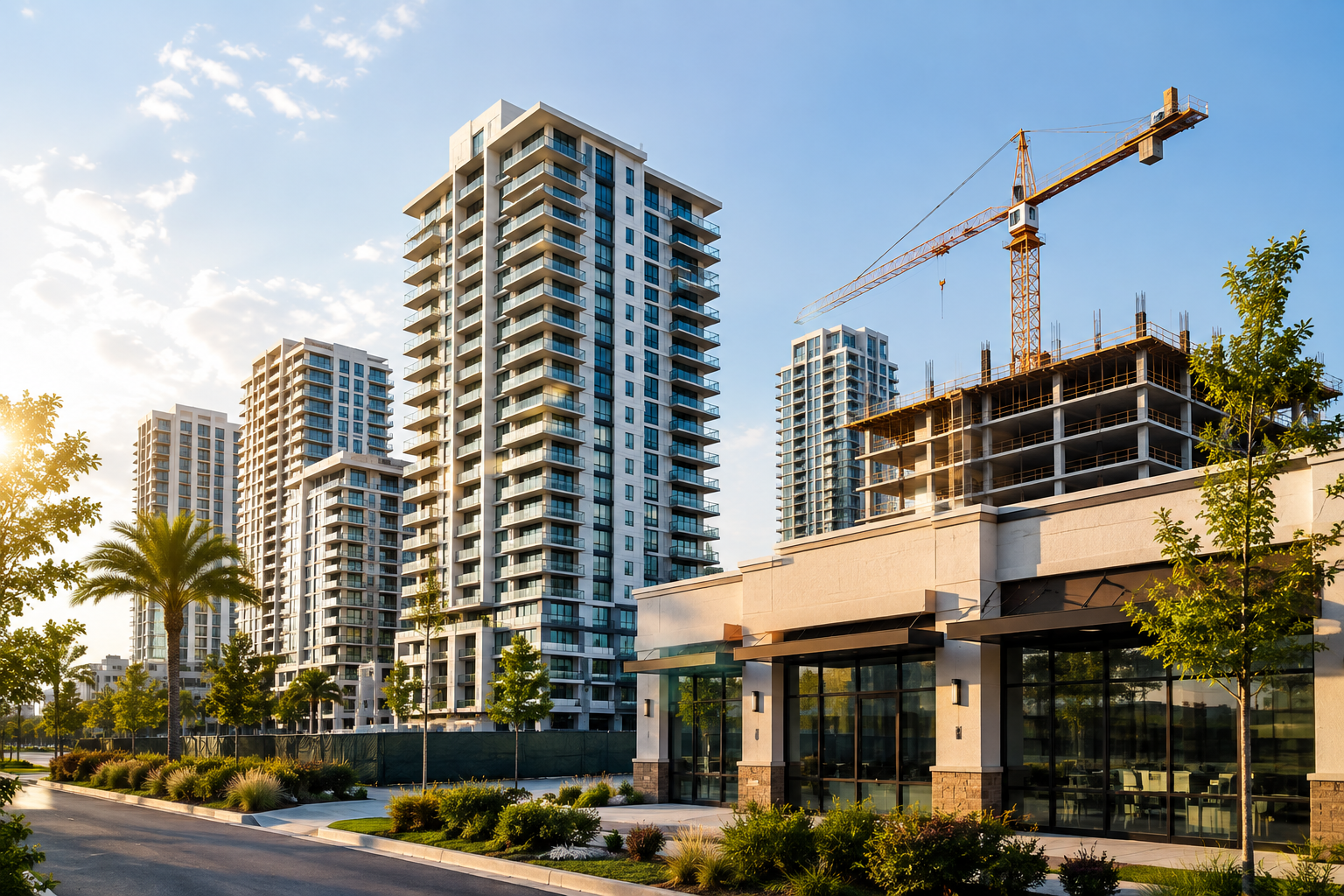
Florida’s Live Local Act Just Expanded Again: What Live Local 4.0 Means for Broward Commercial Owners
The July 1, 2026 update turns more commercial, retail, and even public land into redevelopment opportunity, and gives developers new leverage when a city says no
If you own a tired retail strip, an underused office parcel, or a commercial site sitting on valuable land in Broward, a state law that expanded again on July 1 may have quietly changed what your property is worth. Florida’s Live Local Act, now in its fourth version, is one of the most significant land-use shifts in a generation, and its latest update widens the door for redevelopment across South Florida. Here is a plain-English breakdown of what the law does, what changed this summer, and what it means for owners, investors, and developers in our market.
| LIVE LOCAL 4.0 AT A GLANCE |
| Density: build to the highest residential density allowed anywhere in the jurisdiction, applied to qualifying commercial, industrial, and mixed-use sites. Height: up to the tallest nearby building within one mile, or three stories, whichever is greater. Approval: administrative approval that can bypass rezoning and land-use hearings for qualifying projects. Affordability: at least 40% of units set aside as affordable to households earning up to 120% of area median income, for 30 years.Parking: at least a 15% reduction near transit, and potential elimination in transit-oriented zones. Property tax: up to a 75% or 100% ad valorem exemption on qualifying affordable units, depending on affordability depth. New on July 1, 2026: now reaches government-owned and qualifying religious-institution land; cities cannot use setbacks or stepbacks to undercut allowed height; and developers can take legal action against municipalities that improperly block qualifying projects. |
General information only, not legal or tax advice. Confirm specifics with qualified counsel. See sources below.
What the Live Local Act Actually Does
At its core, the Live Local Act is a state override of local zoning for projects that include affordable housing. On qualifying commercial, industrial, and mixed-use sites, a developer can build residential or mixed-use density up to the highest level allowed anywhere in that jurisdiction, reach the height of the tallest building within a one-mile radius, and secure administrative approval that can skip the rezoning and land-use hearings that normally add years and risk to a project.
In exchange, the project has to deliver affordability. At least 40% of the units must be reserved as affordable to households earning up to 120% of area median income, with rents capped and the commitment locked in for 30 years. To make the math work, the Act layers in incentives: parking reductions of at least 15% near transit, and a property tax exemption of up to 75% or 100% on qualifying affordable units depending on how deep the affordability goes. For an owner of aging commercial land, that combination can turn a marginal parcel into a genuine redevelopment play.
What Changed on July 1, 2026
The 2026 update, often called Live Local 4.0, did not rewrite the law so much as widen it and put teeth behind it. Four changes stand out for our market.
First, the pool of eligible land got bigger. The Act now reaches government-owned property held by a county, municipality, or school district, and qualifying religious-institution property of at least three acres with a long operating history. That opens a wave of public-private and faith-based redevelopment sites that were previously off the table.
Second, the law closed a loophole cities had used to limit height. Local governments can no longer use setbacks, stepbacks, or other dimensional controls to quietly claw back the height the Act allows.
Third, and this is the big one for developers, the update added real enforcement teeth. It expands fair-housing enforcement so that a municipality can be held accountable for improperly blocking a qualifying project, waives certain sovereign-immunity protections, and puts injunctive relief, damages, and attorneys’ fees on the table. In plain terms, a city that says no to a qualifying Live Local project now faces a much stronger legal challenge than before.
Fourth, the update clarified definitions retroactively to January 1, 2024, confirming that parcels allowing commercial or industrial use by right qualify regardless of how the zoning category is labeled, which removes a common source of dispute. Certain areas remain excluded, including airport-impacted zones, working waterfronts, and designated conservation and park districts.
Why This Matters for Broward Owners and Investors
South Florida is exactly the kind of market Live Local was built to move. Land is expensive, height and density are tightly controlled, and there is deep demand for workforce housing near jobs. For a commercial owner, the practical takeaway is that your parcel may now be worth more as a redevelopment site than as the retail center or office building sitting on it today. That is a different conversation than a lease renewal, and it is one more owners in Plantation, Sunrise, Miramar, and across West Broward are starting to have.
For investors and developers, the expansion to public and religious-institution land, combined with the new leverage against cities that stall projects, changes the underwriting. Sites that were once too risky because of entitlement uncertainty look more actionable when the approval path is clearer and the legal remedies are stronger. As always, the affordability set-aside and the 30-year commitment have to be modeled carefully, because the entitlements are valuable but they are not free.
The Trade-Offs to Keep in Mind
This is not a giveaway, and treating it like one is how projects get into trouble. The 40% affordable requirement and the 30-year covenant are real constraints that shape your rent roll and your exit. The property tax exemption offsets a meaningful share of that, but the blended-income model and longer hold period demand disciplined underwriting. Mixed-use projects also have to keep the majority of their square footage residential, and the excluded zones are firm. The owners and investors who win with Live Local are the ones who treat it as a financing and entitlement tool to be modeled, not a headline to chase.
What to Expect
Expect Live Local to keep reshaping where and how housing gets built in South Florida, and expect more commercial and retail parcels to be evaluated for their redevelopment potential rather than just their in-place income. With each version, the state has widened the law and strengthened it against local pushback, and the 2026 update continues that trajectory. For commercial owners, the smart move is not to rush, but to know what your land can support under the current rules before you make a decision about selling, holding, or repositioning.
Expert Advice for Broward Owners and Investors
If you own or are looking to acquire commercial property in Broward, here is how we would approach the current Live Local landscape:
- Value your land, not just your building. A qualifying parcel’s redevelopment potential under Live Local may exceed its value as an in-place asset. Before you renew a marginal tenant or sell at an as-is number, understand what your site can support.
- Know the trade-off before you chase the upside. The density, height, and tax benefits come with a 40% affordable set-aside for 30 years and income caps. The exemption offsets a lot, but only careful underwriting tells you whether a specific site pencils.
- Watch the public-land expansion. Cities, counties, and school districts can now bring their own land into Live Local projects. That can reshape both competition and partnership opportunities near your property.
- Understand your new leverage. If a municipality improperly blocks a qualifying project, the 2026 update provides real legal remedies. That changes the negotiating dynamic between developers and local governments.
- Time your structure to the current rules. Pending applications can elect the prior or the 2026 framework, and new projects should be built to the current provisions. The right path depends on your site and your timeline.
How CMV Commercial Helps
At CMV Commercial – The Martinez Team, we help commercial owners, investors, and developers across Plantation, Sunrise, Miramar, Weston, Fort Lauderdale, and the broader South Florida market understand what their property is actually worth in today’s environment, including its redevelopment potential under evolving state law. We are not attorneys, and Live Local questions ultimately need qualified legal and tax counsel, but we can help you frame the opportunity, run the market side of the analysis, and connect the right professionals around the table.
Whether you are weighing a sale, evaluating a redevelopment site, or trying to understand what a Live Local buyer might pay for your parcel, our team pairs boutique, relationship-driven service with current market knowledge so you can make a decision you can stand behind.
Let’s Talk About Your Property
If you want a confidential read on what your commercial or retail property could be worth as a redevelopment site under the Live Local Act, reach out. We are glad to walk through the market side with you and bring in the right legal and tax partners.
Gus Martinez | (954) 394-7078
Email: gus@martinezteamcommercial.com
Website: MartinezTeamCommercial.com
Office: 8211 W. Broward Boulevard, Suite 230, Plantation, FL 33324
Frequently Asked Questions
What is Florida’s Live Local Act?
The Live Local Act is a Florida law that overrides certain local zoning rules for projects that include affordable housing. On qualifying commercial, industrial, and mixed-use sites, developers can build to the highest residential density and height allowed in the jurisdiction and use an administrative approval process, in exchange for reserving at least 40% of units as affordable to households earning up to 120% of area median income for 30 years.
What changed in the 2026 Live Local update (Live Local 4.0)?
Effective July 1, 2026, the Act expanded to include government-owned and qualifying religious-institution land, closed a loophole that let cities use setbacks and stepbacks to limit height, and added stronger enforcement so developers can pursue legal remedies against municipalities that improperly block qualifying projects. It also clarified eligibility definitions retroactively to January 1, 2024.
Does the Live Local Act apply to commercial or retail property?
Yes. Much of the Act’s power is that it applies to land zoned for commercial, industrial, or mixed-use, which is why owners of aging retail centers and office parcels are evaluating their sites for redevelopment. A qualifying commercial parcel can often support far more residential density than its current zoning would suggest.
What are the affordability requirements?
A qualifying project must reserve at least 40% of its residential units as affordable to households earning up to 120% of area median income, with rents capped and the commitment maintained for 30 years through a recorded covenant. Deeper affordability can unlock a larger property tax exemption on the qualifying units.
Can a city or county block a Live Local project?
It is much harder now. The 2026 update strengthened enforcement so that a municipality that improperly denies a qualifying project can face injunctive relief, damages, and attorneys’ fees. Local governments still administer excluded areas and specific criteria, so eligibility should always be confirmed with qualified counsel for a given site.
Related Commercial Real Estate Insights
- West Broward Office Market Q2 2026: The Market Turned a Corner, and Value Space Led the Way
- Broward Industrial Market Update: While Office Sorts Itself Out, Industrial Is Finding Its Floor
- West Broward Commercial Real Estate Mid-Year Outlook | June 2026
- Step-by-Step Guide to Buying Commercial Property in Plantation, FL
- Redevelopment and Land Opportunities in Broward County
- Seller and Investment Advisory Services in South Florida
CMV Commercial – The Martinez Team
Plantation | Fort Lauderdale | Weston | Sunrise | Davie | Miramar | Pembroke Pines | Coral Springs | Pompano Beach | Miami | South Florida
Sources: Holland & Knight, 2026 Updates to Florida’s Live Local Act (HB 1389), July 2026; Florida Legislature, HB 1389 (2026); and published legal and market analyses of the Live Local Act. This newsletter is general information, not legal or tax advice. Provisions, thresholds, and eligibility should be confirmed with qualified counsel for any specific property.